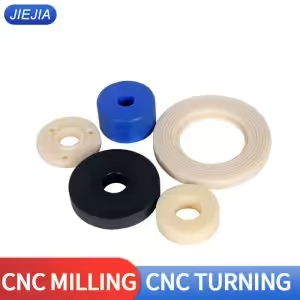
Cnc Turning Plastic
Custom CNC Plastic Turning Service Company – China Plastic Turning Parts Manufacturer
Welcome to! Here, we not only provide various CNC metal machining services, but also bring you professional CNC turning plastic services. We have advanced CNC machine tools and digital control systems to ensure that the quality and precision of your plastic products are reliably guaranteed. No matter what kind of plastic machining service you need, we will meet your needs with high-speed, high-quality equipment and the most professional technical force to win the market guarantee for your plastic products. From plastic parts manufacturing to plastic mold processing, we are able to provide you with a full range of solutions. We understand the characteristics of plastic materials and applications, so we can provide you with customized plastic processing solutions. No matter how big or small your project is, we will do our best to provide you with high quality and efficient services. Feel free to contact us for more information about CNC turning plastics. We look forward to cooperating with you for a bright future!
CNC turning commonly used plastics are as follows:
CNC turning ABS
CNC turning Bakelite
CNC turning FR4
CNC turning nylon
CNC turning PE
CNC turning PEEK
CNC turning POM
CNC turning PP
CNC turning PPS
CNC turning PTFE
CNC turning PVC
CNC turning carbon fiber
Features of CNC turned plastics
CNC turning plastics is a technology that uses CNC machine tools and digital control systems to process plastic materials. Compared with traditional manual or mechanical turning of plastics, CNC turning of plastics has the following characteristics:
High precision: CNC turning plastics can realize highly accurate processing. Through the precise control of the CNC system, the error caused by human factors can be reduced to ensure the accuracy and consistency of plastic parts.
Flexibility: CNC turning plastics is suitable for processing plastic parts of various complex shapes. Through programming, processing of different shapes, sizes and angles can be easily achieved to meet individualization and customization needs.
Automated Processing: CNC turning plastics is an automated process. Once the programming setup is complete, the CNC machine can automatically perform machining operations without human intervention, improving productivity and consistency.
High Efficiency: CNC turning plastics offers higher machining efficiency than traditional manual turning. Automated processing and fast cutting speeds can save a lot of time and human resources.
Fine machining: CNC turning plastics can realize fine machining, such as tiny holes, threads and textures, which makes the plastic parts have higher degree of refinement and aesthetics.
Material saving: CNC turning plastics can cut precisely according to the design needs, minimize the generation of waste, save plastic materials and reduce production costs.
Widely used: CNC turning plastic is suitable for various types of plastic materials, such as polyethylene (PE), polypropylene (PP), polyvinyl chloride (PVC), polystyrene (PS), etc., which are widely used in electronics, automotive, medical equipment, daily necessities and other industries.
What is CNC turning plastics
CNC turning plastics is a technology that utilizes CNC machine tools and digital control systems to process plastic materials. In CNC turning plastics, through pre-programmed instructions, the computer controls the tools on the CNC lathe to make precise cuts and turnings in multiple axes, so as to process the plastic materials into the required shapes and sizes.
CNC turning plastics has a higher degree of processing accuracy, flexibility and automation compared to traditional manual or mechanical turning plastics. The operator only needs to program the cutting path and parameters, and then start the CNC system, the machine tool can automatically perform the machining operation without the need for continuous manual control, which improves productivity.
How does CNC turning plastics work
The following is the workflow of CNC turning plastics:
Design and Programming: First, a three-dimensional model of the plastic workpiece is created using computer-aided design (CAD) software. Then, specialized CNC programming software (CAM) is used to convert the designed model into G-code or M-code that the CNC lathe can understand and execute. These codes contain instructions for tool paths, depth of cut, speed, and other machining parameters.
Setting up the lathe: The plastic workpiece is secured to the table of the CNC lathe and the initial positions of the tool and workpiece are set up according to the programming. This includes adjusting the position and angle of the workpiece, selecting the appropriate tool, and loading the tool into the tool holder of the CNC lathe.
Machining operation: The operator enters the pre-programmed G-code into the CNC lathe via the computer control system. Once the machining is started, the computer control system will control the cutting and turning of the tool in the X and Z axes in sequence according to the instruction, and process the plastic workpiece step by step according to the predetermined trajectory and depth.
Cutting and turning: The tool on the CNC lathe moves along the X and Z axes to cut and turn the plastic workpiece according to the instructions of the G code. Parameters such as tool movement and depth of cut are precisely controlled by a computerized control system to ensure that precise shapes and sizes are machined.
Automated operation: Once machining begins, the CNC lathe is capable of executing the entire machining process automatically without human intervention. The computer control system will notify the operator when machining is complete.
Inspection and Completion: After machining is completed, necessary cleaning and inspection are carried out to ensure that the machined workpiece meets the design requirements and achieves the required accuracy and quality standards.
Advantages of CNC turning plastics
The following are the main advantages of CNC turned plastics:
High precision: CNC turning plastics can achieve very high machining precision. Through the precise control of the CNC system, errors caused by human factors can be reduced to ensure the accuracy and consistency of plastic parts.
Flexibility: CNC turning plastics is suitable for processing plastic parts of various complex shapes. Through programming, processing of different shapes, sizes and angles can be easily achieved to meet individualization and customization needs.
Automated Processing: CNC turning plastics is an automated process. Once the programming setup is complete, the CNC machine can automatically execute the machining operation without the need for continuous manual control, which improves productivity.
High efficiency: CNC turning plastics has higher processing efficiency than traditional manual turning plastics. Automated processing and fast cutting speed can save a lot of time and human resources.
Fine machining: CNC turning plastics can realize fine machining, such as tiny holes, threads and textures, etc., which makes the plastic parts have higher exquisiteness and aesthetics.
Material saving: CNC turning plastics can cut precisely according to the design needs, minimize the generation of scrap, save plastic materials and reduce production costs.
High Repeatability: Due to the precise control of the CNC system, CNC turning plastics can realize highly repetitive processing, ensuring the consistent quality of each plastic part.
Simplified operation: Compared with traditional manual turning, CNC turning plastics is simpler to operate, only need to write the appropriate machining program and execute it through the CNC system, which reduces the operator’s skill requirements.
Equipment and tools for CNC turning plastics
The following are the commonly used equipment and tools for CNC turning plastics:
CNC Lathe (CNC Lathe): The core equipment of CNC turning plastics is CNC lathe, which can automatically carry out turning processing through computer control. CNC lathe can carry out high-precision tool movement in the X and Z axes to realize the processing of various shapes such as internal and external round, flat and threaded plastic workpieces.
Tools: CNC turning plastics use a variety of tools for cutting and turning. Types of tools include internal cutting tools, external cutting tools, boring tools, threading tools, etc. Different tools are suitable for different types of machining tasks.
Automatic tool changer: CNC lathes are usually equipped with an automatic tool changer, which can automatically change different types of tools according to pre-programmed programs to realize a variety of machining operations.
Fixture: In the CNC turning of plastics, the plastic workpiece needs to be fixed on the lathe table for cutting and turning. The fixture is a device used to hold the workpiece to ensure that the workpiece remains in a stable position during the machining process.
Coolant system: CNC turning of plastics generates a lot of heat, which requires the use of a coolant system to cool the tool and the workpiece, preventing overheating damage and effectively prolonging the life of the tool.
CNC system: the core control part of CNC lathe is the CNC system. It consists of a computer and a controller that can interpret and execute pre-programmed G-code or M-code to control the movement of tools and workpieces in each axis.
CAD/CAM Software: Before CNC turning plastics, computer-aided design (CAD) software is required to create a three-dimensional model of the plastic workpiece. CNC programming software (CAM) converts these designed models into G-code or M-code that is recognized by the CNC lathe.
Measuring and Inspection Equipment: After CNC turning plastics, measuring and inspection are usually required to ensure that the machined plastic parts meet design requirements and accuracy standards. Commonly used measuring equipment includes micrometers, micrometer gauges, and CMMs.
Areas of CNC turning plastic applications
The following are the common application areas of CNC turned plastics:
Electronic products: CNC turned plastics are used to process the shells and parts of various electronic products, such as cell phone shells, computer parts, communication equipment and so on.
Automobile industry: In the process of automobile manufacturing, CNC turned plastics are used to process various automobile parts, such as instrument panels, interior parts, lamp components and so on.
Medical Devices: CNC turned plastics have important applications in the manufacture of medical devices, and are used to process various parts and shells of medical devices.
Mechanical Manufacturing: CNC turned plastics are widely used in mechanical manufacturing industry for processing various mechanical parts, such as shafts, gears, connectors and so on.
Daily necessities: CNC turned plastics are used for processing various daily necessities, such as furniture fittings, kitchen utensils, cosmetic containers and so on.
Plastic molds: In the manufacturing process of plastic molds, metal parts need to be processed and turned, and CNC turned plastics can provide high-precision processing results.
Aerospace: CNC turned plastics are also used in the aerospace field for processing aircraft parts and aviation equipment.
Electrical fittings: CNC turned plastics are used to process electrical fittings such as plugs, sockets and switches.
Toy Manufacturing: In the toy manufacturing industry, CNC turned plastics are commonly used to process toy parts and housings.
Common problem solutions for CNC turning plastics
Here are some common problems and their solutions:
Poor surface quality: This may be caused by tool wear, improperly set cutting parameters or unstable workpiece clamping. Solutions include replacing the tool with a new one, adjusting the cutting parameters to ensure proper depth of cut and feed rate, as well as checking and reinforcing the workpiece clamping.
Machining dimensional deviations: may be caused by CNC system errors, machine wear, tool wear or programming errors. Solutions include CNC calibration, maintenance of the machine tool, timely replacement of worn tools, and careful inspection and proofreading of the programming code.
Tool breakage: It may be caused by improper tool selection, unreasonable cutting parameter settings or excessive tool wear. Solutions include choosing the right tool material and type, ensuring reasonable cutting parameters, and replacing tools regularly.
Cutting noise: it may be caused by the friction between the tool and the workpiece or cutting vibration. The solution includes adjusting the cutting speed, feed rate and depth of cut, as well as ensuring that the tool and workpiece surfaces are smooth to reduce cutting noise.
Cutting chip exclusion is not smooth: may be cutting parameters are not set reasonably or lubrication caused by insufficient. The solution includes adjusting the cutting parameters and increasing the supply of cooling lubricant to ensure a smooth cutting process.
Program error: It may be caused by programming error of G code or M code. The solution includes checking the programming code to ensure that the programming is correct.
CNC system failure: If the CNC system fails, machining may be interrupted. Solutions include checking the power and connections to the CNC, restarting the system, or seeking the help of a professional technician.
Fixture problems: Unstable workpiece clamping or poorly designed fixtures may cause machining problems. Solutions include adjusting the fixture to ensure that the workpiece is fixed and stable, and designing a suitable fixture according to the machining requirements.
High machining temperatures: Long periods of high-speed cutting can lead to high temperatures in the machining area. Solutions include appropriately reducing cutting speed, increasing cutting lubrication, or taking cooling measures to ensure that the machining temperature is within a reasonable range.